What belongs in a small first aid kit?
Wound cleaning, wound closing, wound covering, blister care, and five core medications: that’s the everyday kit, and it fits in a sandwich bag. Build it around the injuries that actually happen (cuts, scrapes, blisters, aches, stings) and it will earn its place weekly, not someday.
First aid is two different kits wearing one name. This book gives each its own chapter. This one is the high-frequency kit: the minor-wound-and-medication layer you’ll open constantly, which is precisely why it stays stocked and familiar. Chapter 26 is the low-frequency, high-stakes trauma layer. Keeping them mentally separate fixes the classic drugstore-kit failure: fifty bandage sizes, no real capability in either direction.
The doctrine that shapes everything here: in the field, small wounds are big deals. An infected cut or a raw heel that would be trivia at home degrades walking, working, and judgment exactly when you need all three (Chapter 2‘s logic never rests). Field first aid is aggressive about small things.
Wound care: clean, close, cover
The wound sequence is clean it, close it, cover it, and the kit stocks each verb: irrigation and antiseptic wipes, closure strips, then dressings and tape. Cleaning is the step that prevents the infection the other two can’t fix.
Clean: pressure irrigation with drinkable water is the gold standard (a zip bag with a pinhole, or a squeezed sport-cap bottle, makes the jet); antiseptic wipes handle edges and your own hands. Getting grit out now beats treating infection later, every time. Close: adhesive closure strips (butterfly-style) pull small gashes shut; wound glue exists in medical grade for the trained. Deep, gaping, or dirty wounds don’t get field-closed at all (sealing contamination inside is the classic error): they get cleaned, covered moist, and walked to care. Cover: non-stick pads against the wound, gauze for bulk, tape to hold, changed when wet or dirty.
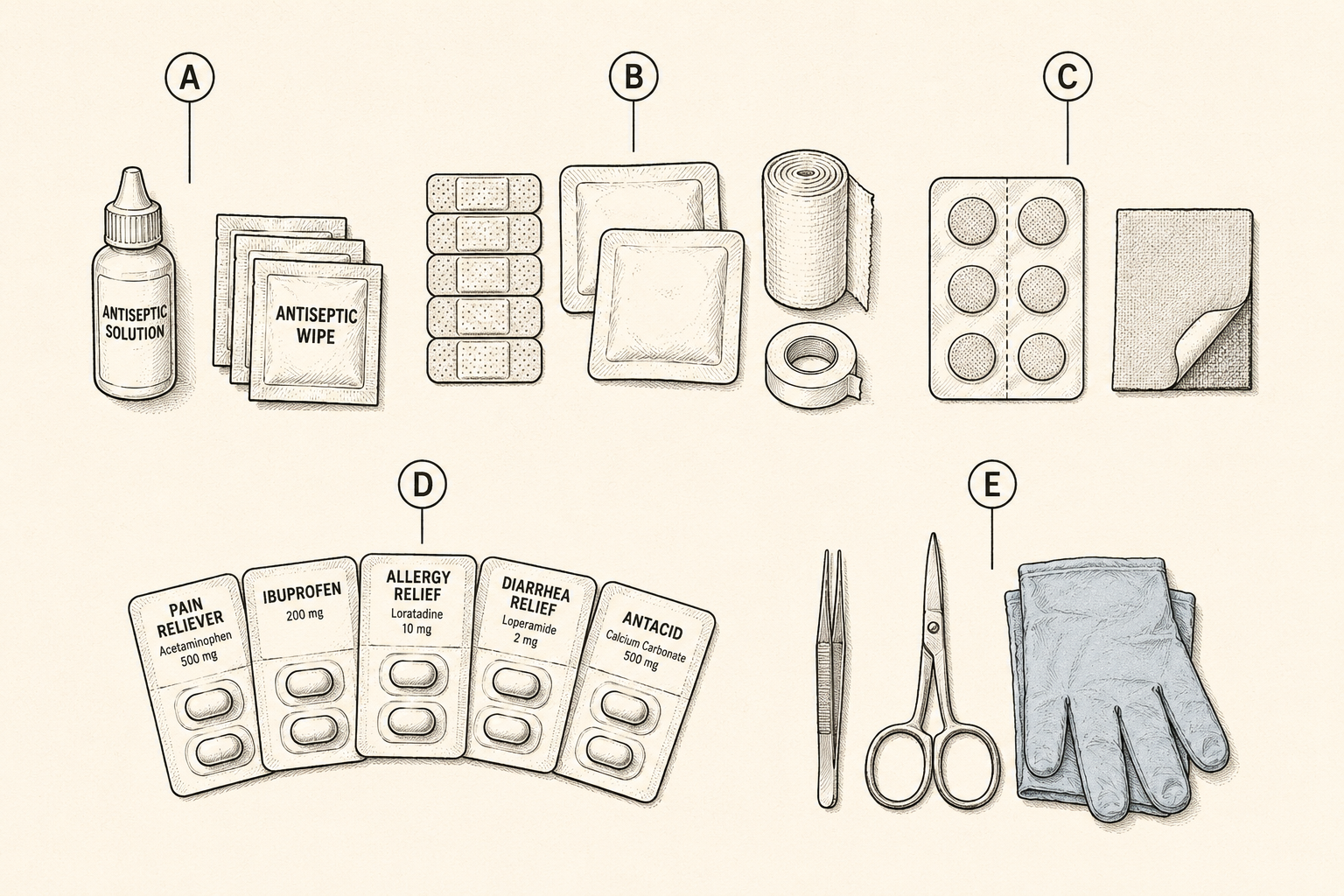
Stock list for the mini kit: a dozen adhesive bandages in two sizes, six closure strips, two non-stick pads, a small gauze roll, a mini tape roll, antiseptic wipes, antibiotic ointment packets, and nitrile gloves (one pair minimum; they’re for their blood, and Chapter 26 doubles down).
The blister protocol
Blisters are the number-one mileage killer, and the protocol is prevention at the first hot spot: stop, dry the foot, and tape the spot before the blister exists. The kit carries tape or purpose blister dressings; the discipline carries the day. Stop early. Every time.
The physiology is friction plus moisture plus miles, which makes the countermeasures obvious and the discipline the hard part.
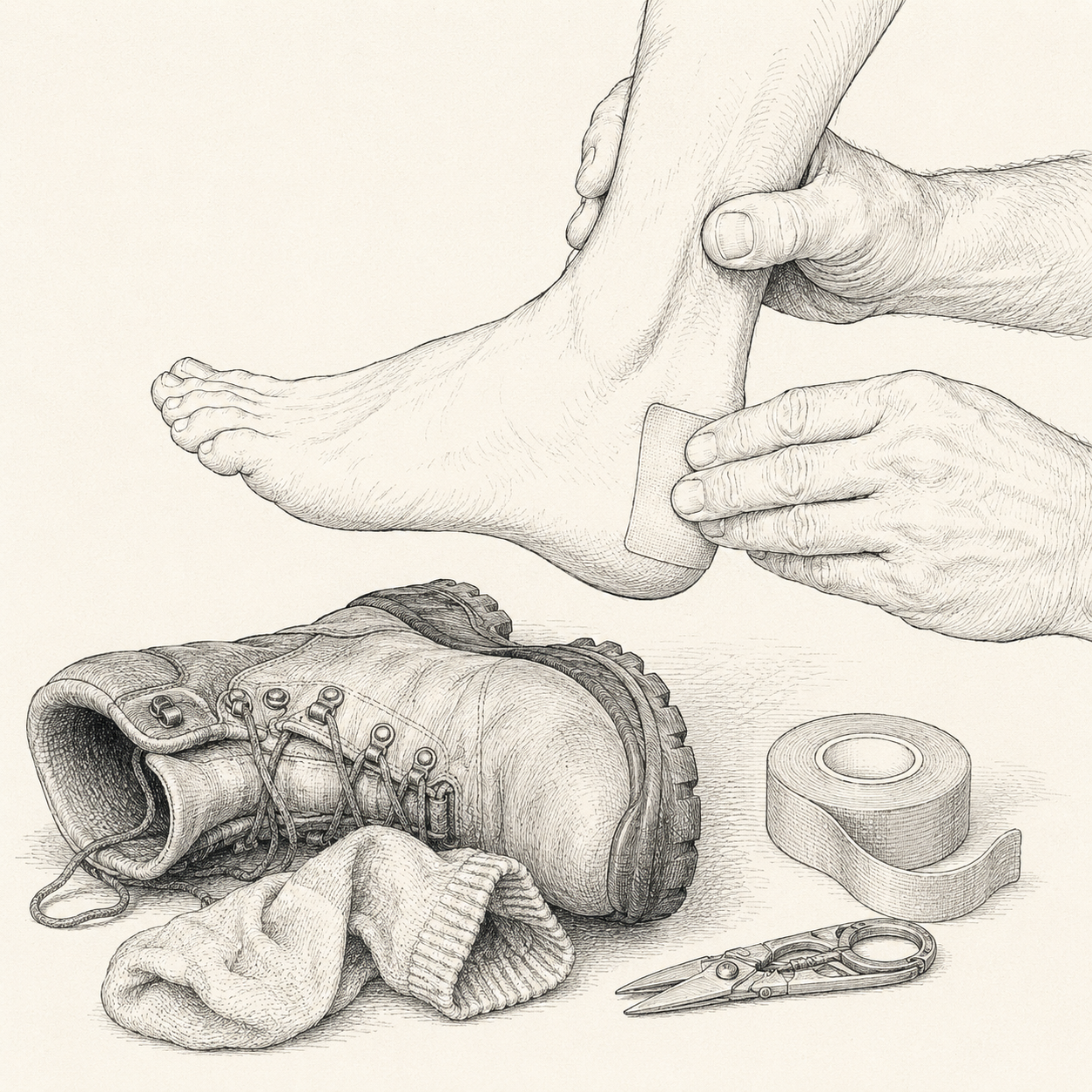
Hot spot (that warm rubbing awareness) means stop now, not at the overlook: sock off, foot dried, the spot covered with kinesiology-style tape, purpose blister patch, or the old moleskin standby, sock seams checked, lacing adjusted. Done at the hot-spot stage, that’s the whole story.
Formed blisters get a judgment call: small and unpainful stays intact under a donut-cut pad (the roof is sterile dressing you can’t buy); large or walking-critical gets drained clean (needle flamed or wiped with antiseptic, punctured at the edge, roof left on) then dressed. Torn-roof blisters are wounds now: clean, ointment, non-stick cover, and the daily change routine. Chapter 21‘s dry-socks doctrine is the other half of every blister answer.
The five-medication core
Five over-the-counter medications cover the field’s common internal miseries: ibuprofen (pain and inflammation), acetaminophen (pain and fever, stacks with ibuprofen), an antihistamine (allergic reactions, stings, sleep of last resort), loperamide (diarrhea, which is a dehydration engine in the field), and aspirin (the heart-attack first response).
Each earns one clarifying line. The two painkillers cover different mechanisms and can be alternated for real pain under label limits. The antihistamine (diphenhydramine-class) treats reactions from stings to hives; its drowsiness is a side effect and occasionally the point. Loperamide converts Chapter 11‘s failure scenario from disabling to managed. Aspirin’s presence is cardiac: 162–325 mg chewed at the first sign of a suspected heart attack is standard first-response guidance while help comes, and it’s the tablet most worth carrying for someone else.
Packaging discipline: blister-packed doses (not loose bottles) labeled with name and expiry, doubled in a zip bag, rotated on the calendar. Label everything. Personal prescriptions ride with a copy of their information (Chapter 33 formalizes this for the go-bag), and family kits audit for kid doses and allergies per Chapter 39.
Tools: the small hardware
Four tools cover the kit’s mechanical needs: fine-point tweezers (splinters, ticks), small trauma shears or scissors, a needle, and nitrile gloves. Add a whistle-check: your Chapter 16 whistle is also a first aid tool the day someone else is hurt.
Tweezers earn the quality upgrade. Cheap ones don’t meet at the points, and splinters laugh at them. Tick technique, since the tweezers are out: grip at the skin, pull straight and steady, no twisting or burning folklore, clean after, and note the date (a spreading rash or fever in following weeks is doctor material, with the date as data). Shears cut tape, moleskin, and clothing without stabbing the patient the way scissors-points threaten to. The needle (with Chapter 27‘s sewing kit backing it) handles splinter excavation and blister drainage after a flame or wipe. Gloves are non-negotiable at every kit scale, for infection control in both directions.
The borderline items, ruled on: tick-removal gadgets (fine, but good tweezers suffice), digital thermometers (home kit yes, field kit optional), sting-relief wipes (cheap comfort, sure), and suction devices for snakebite (no: modern guidance retired them; the field answer to envenomation is immobilization, calm, and evacuation).
Sprains, strains, and the walking wounded
Musculoskeletal injuries get RICE-adjacent care and honest triage: rest what’s resting, compress and support what must keep walking, and let the elastic wrap plus tape turn an ankle roll into a finishable day. The mini kit carries one elastic bandage for exactly this.
Current thinking has softened the old ice-everything reflex (ice is comfort more than cure, and scarce outdoors anyway), but the field sequence stands: stop, assess (can it bear weight at all? deformity or bone tenderness means Chapter 26 territory and evacuation thinking), then support: elastic wrap in a figure-eight for ankles, tape reinforcing, the boot re-laced snug as a splint-lite. Trekking poles or a found staff offload the joint; pace drops; the day’s plan shrinks to match. Swelling management is elevation at stops and the wrap re-checked for tightness as tissue swells (toes stay warm and pink, or the wrap loosens).
The triage honesty matters both ways: plenty of sprains walk out fine with support, and pushing a real fracture “because it’s probably fine” buys permanent damage. Deformity, grinding, rapid ballooning, or inability to bear any weight are stop signals, and Chapter 17‘s devices exist for exactly this call.
Burns, bites, and stings
Field burns get cool running water early and clean covering after (no folk toppings); stings get the stinger scraped out, cold, and antihistamine watchfulness; the anaphylaxis question gets asked of every group before the trip, not during the reaction.
Burn basics: cool the burn promptly with clean cool water, minutes of it, genuinely cooling the tissue. Then cover loosely with non-stick dressing. Blisters stay intact. The butter-and-toothpaste folklore stays home. Size and depth drive evacuation: anything bigger than the patient’s palm, any full-thickness (painless, white or charred) area, and any significant face/hands/groin burn is professional territory. Camp-stove and fire scalds are the field’s common burn, which makes Chapter 15‘s stable-pot-and-windscreen habits first aid by prevention.
Stings and bites: scrape a bee stinger sideways out (pinching injects more), cold compress, antihistamine from the core five, and then the watch: spreading hives, lip or throat swelling, wheeze, or faintness is anaphylaxis, and anaphylaxis is epinephrine-and-evacuate, immediately. Anyone with known severe allergy carries their auto-injector where companions can find it, and companions know the site and the technique before the trailhead. That sentence is the whole reason this paragraph exists.
Scaling across the layers
First aid scales like everything else: adhesive bandages and ointment in the tin, this chapter’s full kit at pack scale, Chapter 26 added from the pack up, and depth plus home-nursing supplies at vehicle and home scale.
The allocation table Part III will implement:
| Layer | First aid loadout |
|---|---|
| Layer 2 tin | Bandages ×4, closure strips ×4, ointment packet, wipes ×2, needle, meds sampler (2 doses each of the core) |
| Layer 3 pack | This chapter complete + Chapter 26‘s bleeding module |
| Vehicle | Pack kit doubled + elastic bandages ×2, more gauze, rigid splint, space for the household’s realities |
| Home | All of it, plus thermometer, wound-care depth, two weeks of prescription cushion (Ch. 34, 39) |
Two habits make any of it real: restock the day you use anything (deferred restocking is how kits hollow out), and audit expiries on the Chapter 41 calendar (medications and ointments age; adhesives die of heat in vehicle kits and get replaced yearly there).
Pack This Chapter
- The everyday kit is clean-close-cover, blister care, five core meds, and four tools; it fits a sandwich bag and gets used weekly.
- Irrigation is the infection-prevention step; deep or dirty wounds get cleaned and covered, never field-sealed.
- Hot spots get taped at the first warmth: the blister protocol is a stopping discipline, not a product.
- Five meds: ibuprofen, acetaminophen, antihistamine, loperamide, aspirin (162–325 mg chewed, suspected heart attack). Blister packs, labeled, rotated.
- Sprains walk with wrap-and-tape support; deformity or no-weight-bearing means stop and call. Restock the day you use anything.
Where Kits Fail
- Fifty bandages, no capability. The drugstore kit’s illusion of readiness. Build by verb: clean, close, cover.
- The blister negotiated with. “At the overlook” is two miles of raw heel away. Hot spots stop the group now.
- Loose mystery pills. Unlabeled tablets in a film canister are a guessing game with doses. Blister packs, names, dates.
- The kit used and never refilled. Every opened kit is a countdown. Restock is part of the injury.
Frequently asked
What should be in a hiking first aid kit?
Wound care (irrigation ability, wipes, closure strips, non-stick pads, gauze, tape, ointment), blister supplies (tape, patches, moleskin), five core medications (ibuprofen, acetaminophen, antihistamine, loperamide, aspirin), and tools (fine tweezers, shears, needle, nitrile gloves), plus one elastic bandage. It all fits a sandwich bag.
How do you treat a blister on the trail?
Ideally before it exists: at the first hot spot, stop, dry the foot, tape the spot, fix the sock seam. A formed blister that must walk gets drained at the edge with a cleaned needle, roof left intact, then padded. A torn blister is a wound: clean, ointment, non-stick cover, daily changes.
Why carry aspirin in a survival kit?
For someone else’s worst day: 162–325 mg chewed at the first signs of a suspected heart attack is standard first-response care while emergency help is summoned. It’s cheap, stable, and the one tablet in the kit most likely to change an outcome. Carry it even if you’d never take it otherwise.
Should you close a wound in the field?
Small, clean, shallow cuts: yes, with closure strips after real irrigation. Deep, gaping, heavily dirty, or animal-bite wounds: no; closing seals contamination inside. Those get aggressive cleaning, moist covering, and a walk toward professional care, with Chapter 26’s pressure skills standing by for the bleeders.