What rain protection does a kit need?
An emergency poncho in every small kit, a real poncho or rain shell at pack scale, and a dry spare base layer sealed in a bag. Wet clothing is the hypothermia triangle’s fastest side, so rain gear is shelter you wear.
Chapter 2 did the physics (evaporation runs continuously off wet fabric; the 30–50°F band with rain is where most hypothermia lives) and Chapter 20 built the roofs. This chapter dresses you, on the logic that the shelter you wear works while you walk, work, and signal, which the tarp cannot. The allocation runs by now-familiar layers: pocket kits carry the two-dollar envelope of not-dying-wet; packs carry rainwear that survives actual use; and every layer past the tin carries the chapter’s quiet hero, the sealed dry layer for after you fail to stay dry.
Because you will sometimes fail. Rain gear doctrine has two halves: keep the water off, and have dry cloth waiting when it gets through anyway.
Emergency ponchos: the envelope
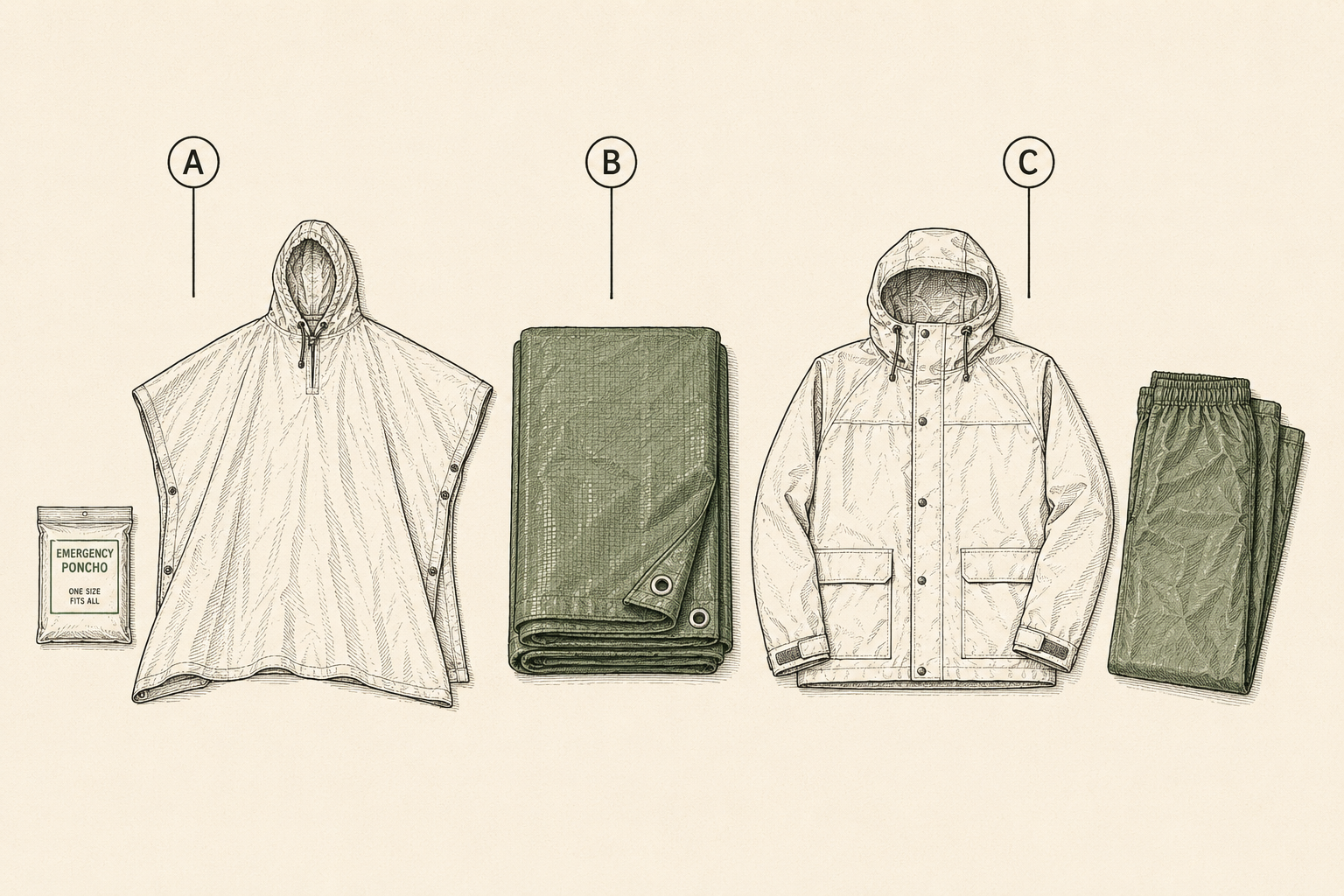
The disposable emergency poncho is mylar’s sibling: a few dollars, a few ounces, full-body rain and wind coverage with a hood, and a lifespan of one hard use. Carry it where weight rules, and carry it in pairs. They tear. Plan on it.
Its virtues are presence and coverage: it packs into any kit down to the large tin, deploys in seconds over whatever you’re wearing (pack included, in a pinch), and converts a soaking rain into a manageable one. Its honest limits: it tears at every snag (thin polyethylene), it condenses (you’ll be damp inside from your own vapor during work), and wind treats it as a kite (belt it with cordage at the waist).
Selection is nearly moot at the price, with two upgrades worth their dollar: thicker “reusable” emergency grades survive several uses, and bright colors feed Chapter 16‘s contrast doctrine. The contractor bag remains the improvised twin (head-and-arm slits, per Chapter 20), and knowing that conversion means you’re never truly poncholess.
Real ponchos versus rain shells
At pack scale, choose between a quality poncho (better ventilation, covers the pack, doubles as tarp) and a rain jacket with pants (better in wind and brush, works while climbing and working). This book’s default: the poncho for kits, the shell for planned trips.
The case for the poncho as kit rainwear: one garment covers torso, legs-ish, and pack; the open bottom vents the condensation that soaks shell-wearers from inside during work; and a poncho with corner grommets is a functional small tarp (Chapter 20‘s A-frame, one garment doing two chapters’ jobs). Military-pattern and quality outdoor ponchos in coated nylon survive brush and years.
The case for the shell system: wind (ponchos flap and fight you above modest gusts), technical movement (climbing, cycling, chainsaw-and-ladder chores), and cold-rain immersion days where full-seal coverage wins. Breathable-membrane shells manage condensation better at real cost; coated-nylon shells do the emergency job at a third the price. In kit terms: the go-bag and day pack get the poncho; your actual hiking kit gets whichever your trips demand; the vehicle gets the cheap shell set because trunk space is free.
Fabric doctrine: what you’re wearing when it starts
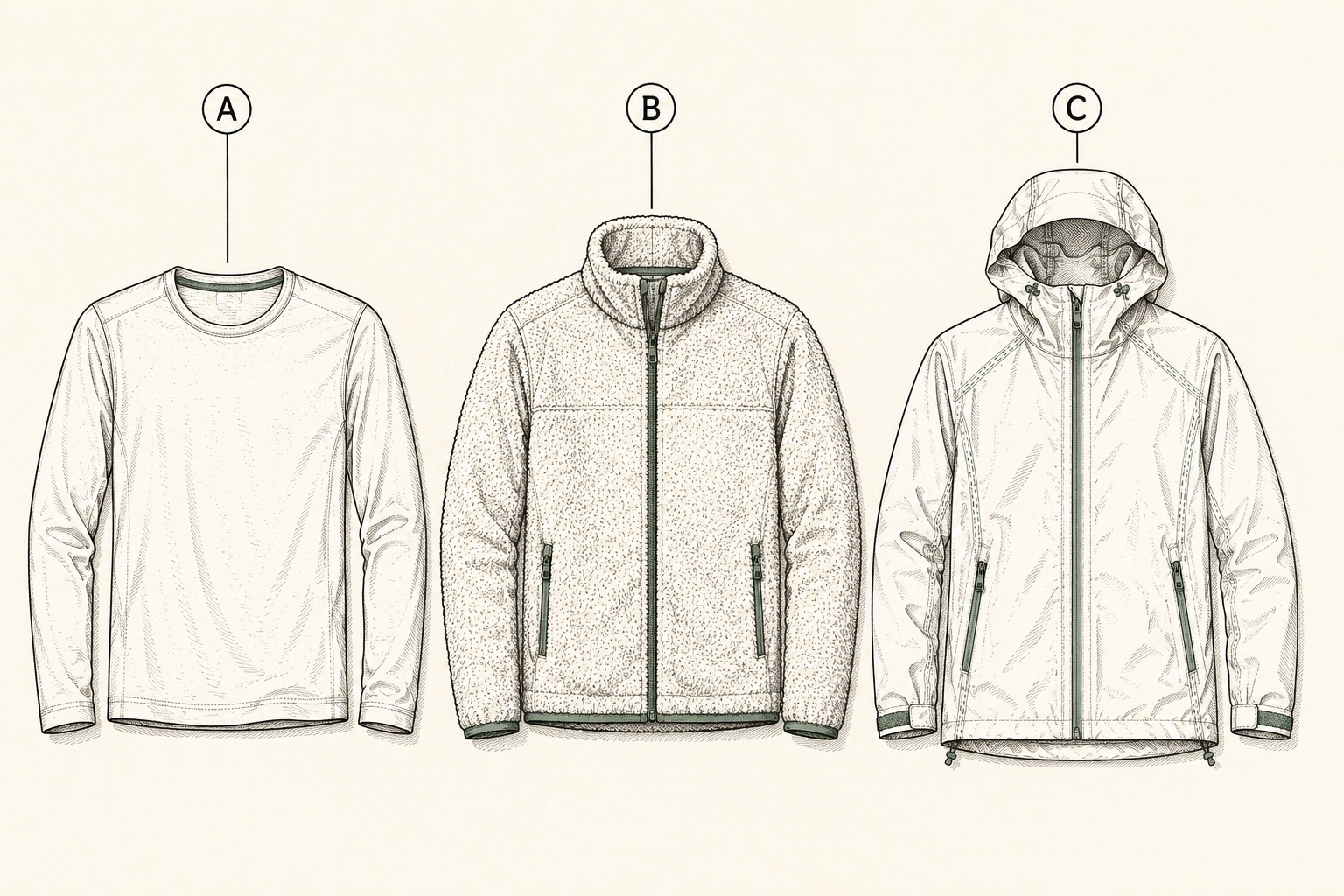
Clothing is the shelter layer you chose this morning: wool and synthetics keep most of their warmth wet, while cotton keeps none of it. In any cool season, the base layer against your skin should never be cotton.
The old outdoor saying about cotton earns its bluntness from the mechanism: cotton absorbs many times its weight in water, dries slowly, and holds that evaporating wetness against your skin, running Chapter 2‘s evaporation loss for hours. Wool and polyester/nylon synthetics absorb little, dry fast, and insulate meaningfully even damp. This is a survival-relevant fact about the clothes you’re already wearing, which makes it the cheapest gear decision in the book: on any cool-season day that could end outdoors, dress in synthetics or wool from the skin out.
Layering completes the doctrine: base (wicking, snug), insulation (the warmth you can add and shed), shell (this chapter’s subject), because sweat management is rain management’s twin.
The overheated hiker who soaks their insulation from inside has done the rain’s job for it; strip layers before sweating, add them at stops.
The sealed spare: dry cloth as equipment
A spare synthetic base layer, socks, and a knit cap, vacuum-flat in a zip bag, is the recovery tool for the already-wet: strip, dry, dress, and the evaporation engine stops. Dry cloth wins. It’s the single most underrated item in cold-wet kits.
Chapter 4 introduced it in the wet-cold module; here’s the full case. Once someone is soaked, no rainwear helps; the water is inside. Recovery is mechanical: get the wet fabric off skin, get dry fabric on, get the envelope (bivvy, blanket, shell) over that. The sealed spare makes the middle step possible, and its bag (kept sealed until genuinely needed, not raided for comfort) is the discipline that keeps it real.
Contents tuning: socks matter double (feet are the most-soaked, least-tended real estate in any wet scenario, and Chapter 25‘s blister section is downstream of wet socks), the cap answers Chapter 2‘s easy-warmth note, and in family kits the spare scales per person. Wring-and-wear (wringing wet clothes hard, then drying them on your body under a shell) is the no-spare fallback: better than nothing, poorer than the ziplock that weighs eight ounces.
Hands, feet, and head in the rain
Extremity protection scales with the kit: a knit cap and liner gloves at pack scale, waterproof gloves and spare socks in vehicles, and in every case the discipline of keeping one set dry. Cold hands can’t work zippers, lighters, or knots, which makes gloves survival gear, not comfort.
The hierarchy of hand protection: liner gloves (thin synthetic or wool, enough for dexterity and real warmth), covered by anything waterproof when soaked conditions demand (dish gloves are the budget secret of wet-cold work; contractor-bag mittens improvise). The knit cap earns permanent kit residence at every scale above the tin. Feet get socks in the sealed spare plus the improvised vapor-barrier trick worth knowing: a plastic bag over the dry sock, inside the wet boot, keeps the new sock dry against all odds. Clammy, effective, an old cold-weather standby.
Chapter 28 handles sun, and Chapter 36 scales all of this for the vehicle’s winter bag. The unifying rule: extremities fail first and recover slowest; spend kit grams on them out of proportion to their size.
Working wet: doctrine when it’s already happening
When rain arrives mid-task, the order is: shell on before you’re wet, hood up last (hearing matters), sweat managed by pace, and a dry-out executed at the first real shelter. Wetness is a budget. Spend it deliberately.
The scenario runs like this. The sky opens forty minutes from the trailhead, and your shell is on within the first thirty seconds, because you watched the sky and staged it at the top of the pack. You slow the pace immediately (sweat is the inside rain), crack the pit zips or poncho sides, and keep the hood back until wind-driven rain forces it, because footsteps and voices and creek-crossings sound different with ears covered. At the trailhead or the tarp, the dry-out is a deliberate drill, not a collapse: wet layers off and wrung, dry spare on, wet things staged to dry (wrung hard, hung where wind or fire reaches them), hot drink started.
That drill (strip, dry, dress, warm) is the difference between a story and a case study, and it’s rehearsable on any rainy Saturday with a backyard and a thermos.
Pack This Chapter
- Rain gear is wearable shelter: disposable poncho in small kits (in pairs, belted in wind), real poncho or shell at pack scale.
- Ponchos vent and double as tarps; shells win wind and work. Kits default poncho; trips choose by activity.
- Cotton keeps none of its warmth wet; wool and synthetics keep most. Cool-season base layers are never cotton.
- The sealed dry spare (base layer, socks, cap) is the recovery tool once wet happens. Keep it sealed until it matters.
- Extremities first: liner gloves, knit cap, spare socks, bag-over-sock trick. Shell on before wet, sweat managed by pace, dry-out drilled.
Where Kits Fail
- The shell at the bottom of the pack. Rain gear staged under everything gets deployed soaked. Top of the pack, always.
- Cotton optimism. The comfortable T-shirt becomes the evaporation engine by dusk. Skin-layer fabric is a survival choice.
- The raided spare. Dry socks borrowed for comfort in October are absent in January. The sealed bag is sealed.
- Sweating inside the shell. Full speed in full rain gear soaks you from inside on schedule. Slow down or vent; pick one.
Frequently asked
Are cheap emergency ponchos worth carrying?
Absolutely, as what they are: a few ounces and dollars that convert soaking rain into manageable damp, once or twice, before tearing. Carry two in small kits, belt them in wind, and upgrade to a real poncho or shell at pack scale. Their job is bridging you to better shelter.
What’s better for hiking, a poncho or rain jacket?
For emergency kits, the poncho: one garment covers you and the pack, vents its own condensation, and doubles as a small tarp. For planned trips in wind, brush, or technical terrain, the jacket-and-pants shell wins. Many experienced hikers carry the shell and keep a poncho in the kit anyway.
Why is cotton bad for survival situations?
Wet cotton loses essentially all insulation and dries slowly, holding evaporative cooling against your skin for hours: it actively accelerates hypothermia in cool weather. Wool and synthetics insulate even when damp and dry fast. The fix costs nothing: choose the base layer by fabric on any cool-season day.
What spare clothes belong in an emergency kit?
A synthetic or wool base layer, two pairs of socks, and a knit cap, sealed flat in a zip bag per person, scaled up with gloves and real insulation in vehicle and home kits. The spare exists for the moment wetness has already won; dry cloth against skin is the recovery tool.